

Look at That Photo Again. That's Not Genetics — And It's Not Two Different People.

Two women. Same bone structure. The only difference is how they breathe — and you don't have to be a mouth breather during the day to end up on the right-hand side of that photo.

Look Properly This Time
You've probably seen this comparison before and scrolled past it.
On the left: the jaw sits forward, the line under the chin is clean, the whole face is stacked the way it's supposed to be. On the right: the chin has dropped back toward the throat, the mouth hangs open, and that clean line under the jaw is gone.
That's what breathing through your mouth does to a face.
And here's what almost nobody tells you: you don't have to be a mouth breather during the day to end up on the right-hand side of that photo.
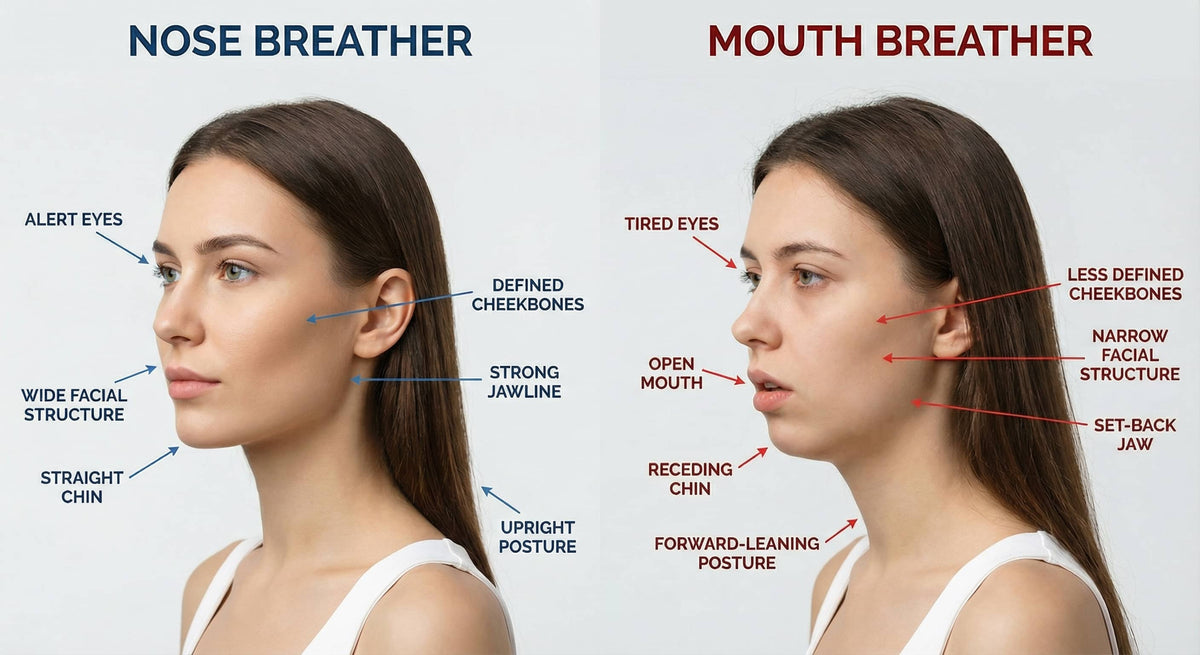
Mouth Breathing Is Quietly Wrecking How You Look — And You're Doing It in Your Sleep
Let me say the thing most people dance around.
Mouth breathing makes your face worse. Not in an abstract, long-term, someday way. Every single night.
When your mouth falls open, your jaw drops back and down. Your tongue slides off the roof of your mouth and collapses toward your throat. Your head pushes forward to compensate. And the entire architecture of your lower face — the part everyone actually notices — folds in on itself.
Your jaw stops projecting forward and starts retreating into your neck. The clean line under your chin, the one that separates a defined jaw from a soft one, disappears. Not because it isn't there. Because it's been folded away, night after night, for years.
Then you wake up, look in the mirror, and blame genetics.
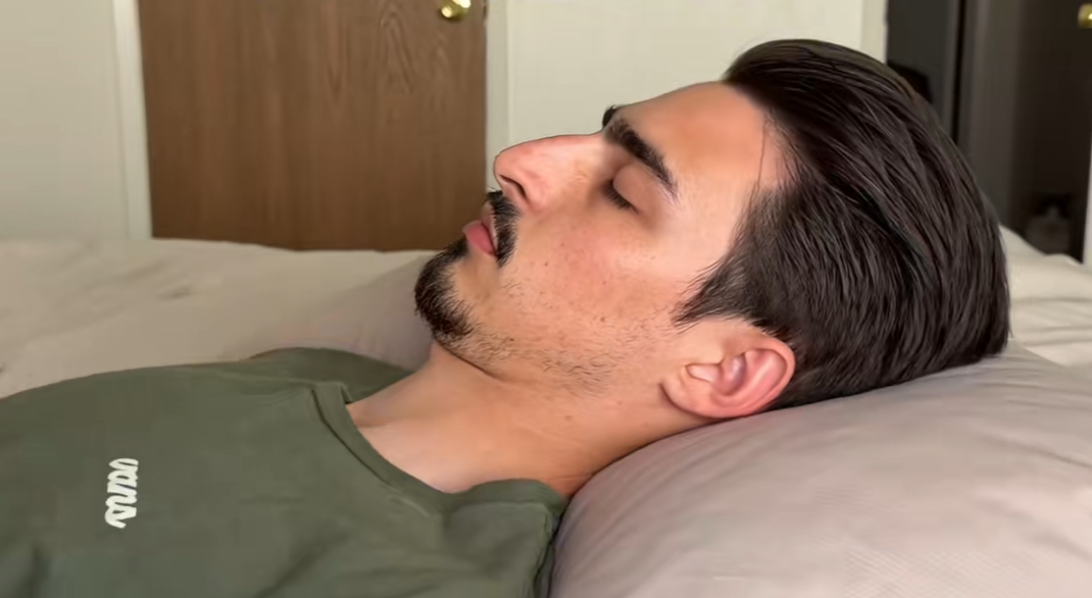
It's Not Your Genetics. It's Eight Hours a Night in the Wrong Position.
Here's what makes this so frustrating: you can do everything right while you're awake and still lose the fight.
You breathe through your nose all day. You hold your posture at your desk. You train. None of it survives the moment you fall asleep — because the second you're unconscious, you hand over control entirely.
And what takes over? A rectangle of foam.
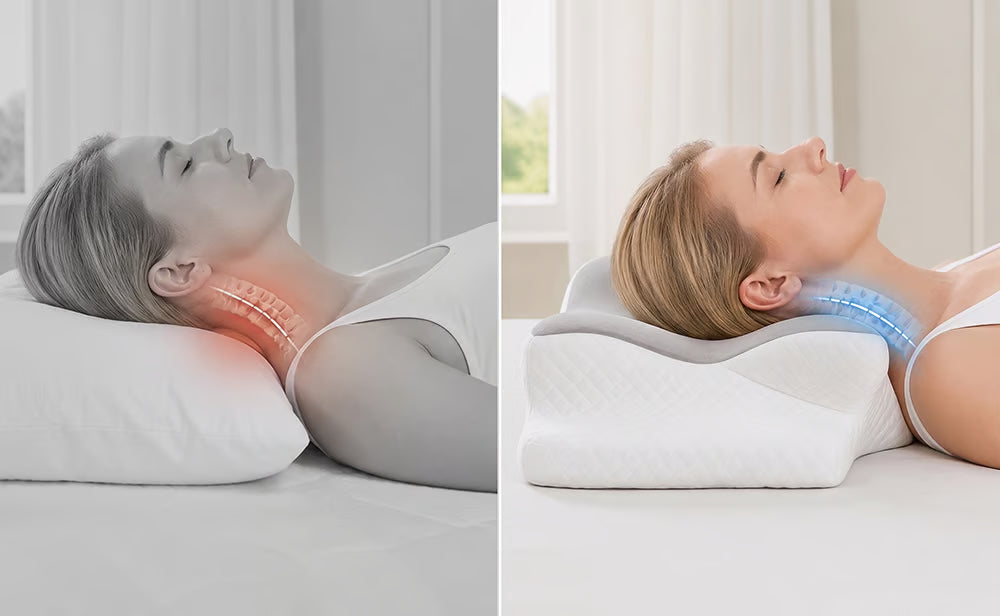
If your pillow drops your chin toward your chest, your airway narrows. When your airway narrows, your mouth opens. Your body doesn't ask permission and it doesn't care what it does to your face. It needs air, and it will take it however it can get it.
Seven to nine hours. A third of your life. Every night, for years, in the exact position that makes your jaw recede and your face collapse forward.
That's not genetics. That's a positioning problem you've never addressed because you were asleep for all of it.
One third of your life happens with your head on a pillow. You've optimised your training, your diet, your skincare. This is the eight hours you've been handing to a $20 rectangle of foam.

Why Mouth Tape and Breathing Exercises Miss the Point Entirely
You've probably seen the fixes doing the rounds. Mouth tape. Chin straps. Breathing apps. Nasal dilators.
They all share the same flaw: they're fighting the symptom while the cause sits untouched underneath your head.
Tape your mouth shut and your airway is still narrowed by a chin that's tucked into your chest. Your body still isn't getting the air it needs — it just has to work harder to get it, and you wake up feeling like you fought something all night. Strap your jaw closed and you've forced a position without fixing the reason it opened. Train your breathing while you're awake and none of it carries over to the eight hours where it actually matters.
None of these address why your mouth opened in the first place.
Your mouth opens because your head is in the wrong position. Fix the position and the mouth stays shut on its own — no tape, no strap, no effort, no fighting your body while you sleep.
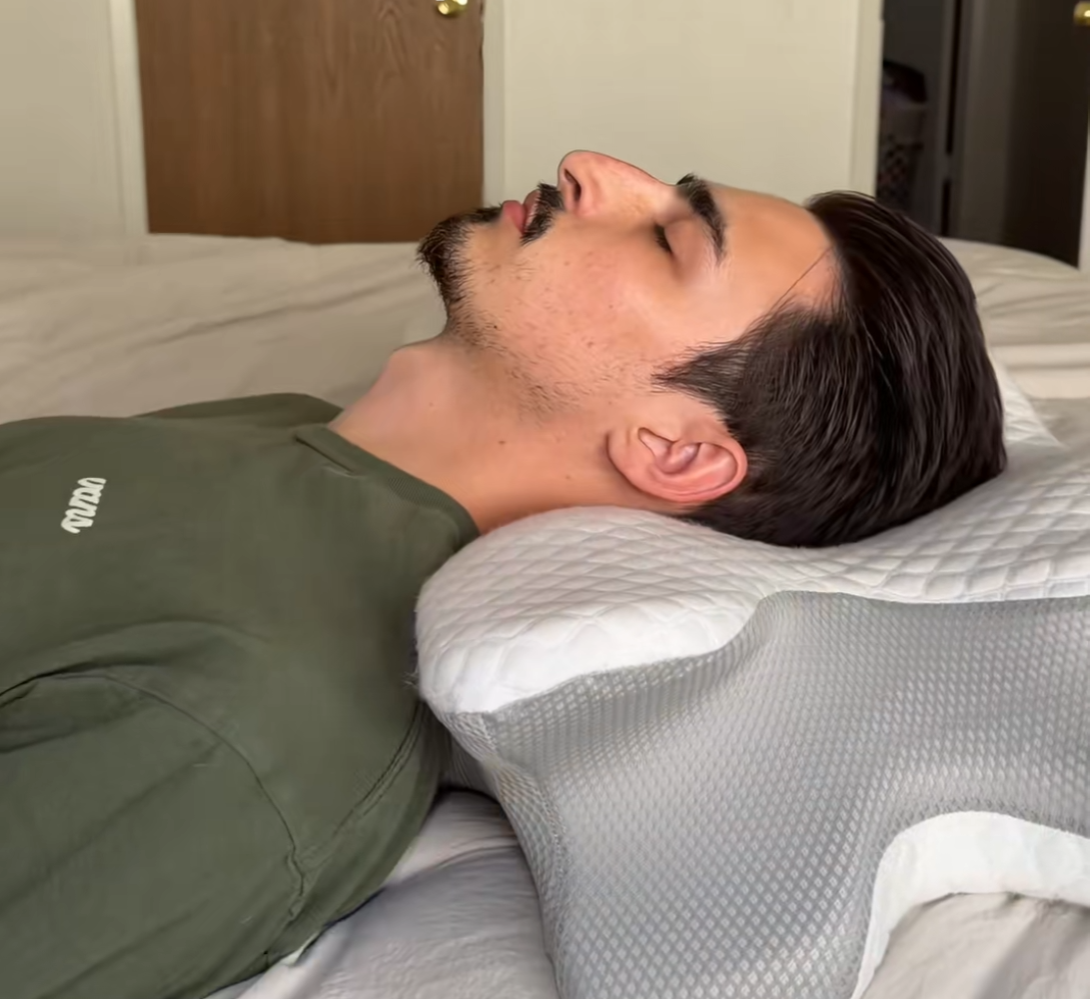
The Only Thing That Fixes the Cause
The Nurvara Align Pillow wasn't designed as a comfort product. It was designed around a single question: what position keeps the airway open, and how do you hold a head there for eight hours?
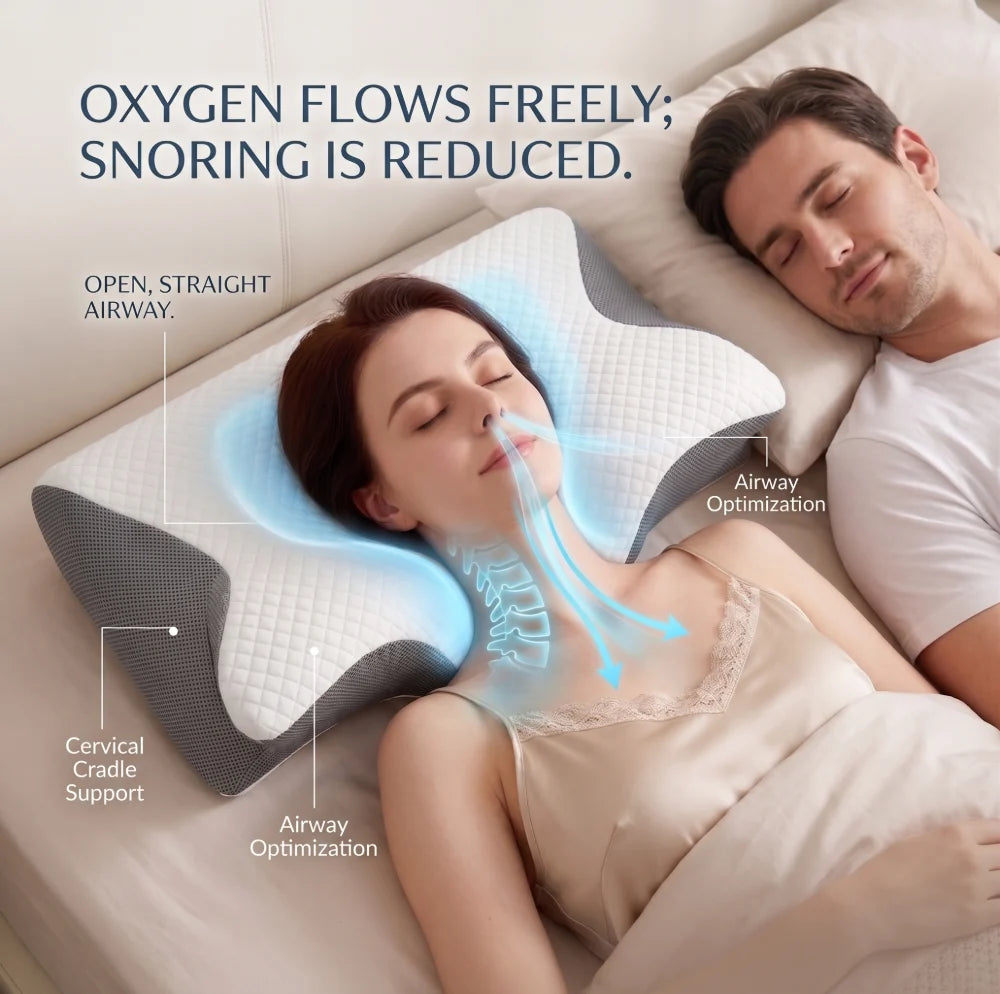
The centre groove. Your head settles down into the pillow rather than perching on top of a block that compresses flat and tips you forward. It stops being pushed out of position the moment you relax.
The neck contour. A raised ridge meets your cervical spine from underneath and fills the gap a flat pillow leaves empty. Your neck is supported instead of bridging thin air.
What that does to your jaw and your face. With the head cradled and the neck supported, your chin lifts away from your chest and your jaw comes forward into the position it's supposed to sit in. The line under your jaw stops collapsing into your throat and reappears — because it was always there. Your airway opens to its normal width. Nasal breathing becomes the easy option instead of the one your body has to fight for, so your mouth has no reason to fall open.
And what that does to everything else. An open airway means fewer micro-wakings, which means you actually reach deep sleep instead of hovering above it all night. That's where the recovery happens — and it's why the puffiness, the dullness and the dark circles start clearing within weeks. Nothing about your bone structure changed. Everything about how your face sits, holds and recovers did.
Same eight hours. Opposite outcome.
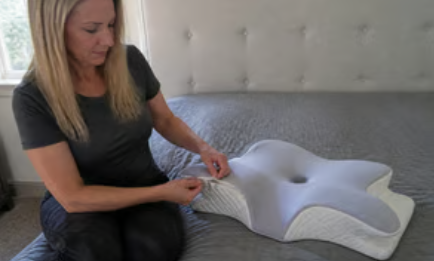
How the Align System Opens Your Airway
Step 1 — The Head Cradle
Your head settles into a dedicated central groove instead of perching on a block that compresses flat. It stops shifting, and it stops being tipped forward the moment you relax.
Step 2 — The Neck Lift
A raised contour meets your cervical spine from underneath and fills the gap a flat pillow leaves. Your neck is supported rather than bridging empty space all night.
Step 3 — The Airway Opens
With the head cradled and the neck supported, your chin lifts away from your chest. The jaw comes forward, the tongue base follows, and your airway returns to its normal width — so nasal breathing becomes the path of least resistance.
Why It Works — A Quick Summary
Airway-First Design
Built around the head position that keeps your airway open, not just around neck comfort.
The Centre Groove
Your head settles in rather than perching on top, so it stops being pushed forward all night.
The Neck Contour
Supports the cervical curve from underneath instead of leaving it to bridge a gap.
Dual Height
5.12" and 4.53" sides, so the fit matches your shoulders and your sleeping position.
High-Density Memory Foam
Slow-rebound foam that holds its shape through the night rather than flattening by 2am.
Washable Cover
Unzips and machine washes. Relevant when you're breathing against it every night.
Who This Is For
Your Current Pillow vs. Airway-First Design
The difference isn't comfort. It's what the pillow does to the position of your head — and what that position does to your airway for a third of every day.

We Offer a Satisfaction Guarantee
You can try the Nurvara Align Pillow completely risk-free. If you're not satisfied, within 90 Days, get a full refund, hastle free and guilt free.
The Closing Question
You've read this far because something landed.
Maybe it was the photo. Maybe it was the realisation that you've spent years optimising the sixteen hours you're awake and handed the other eight to whatever pillow happened to be on the bed.
You can't consciously choose how to breathe while you're unconscious. That's never going to change.
What you can choose is the position your head is held in for a third of your life — and that single decision determines whether you spend those hours fighting for air through a narrowed throat, or breathing the way you're supposed to.
You just put your head down. The pillow does the rest.
UPDATE: As of Today Demand for the Nurvara Align Pillow™ has surged, and inventory is flying off the shelves! Order now to get 60% OFF + FAST SHIPPING before it's gone!
Stop Fighting Your Own Airway Every Night
Sale Ends Soon
[Only include an urgency or exclusivity claim here if it's actually true.]